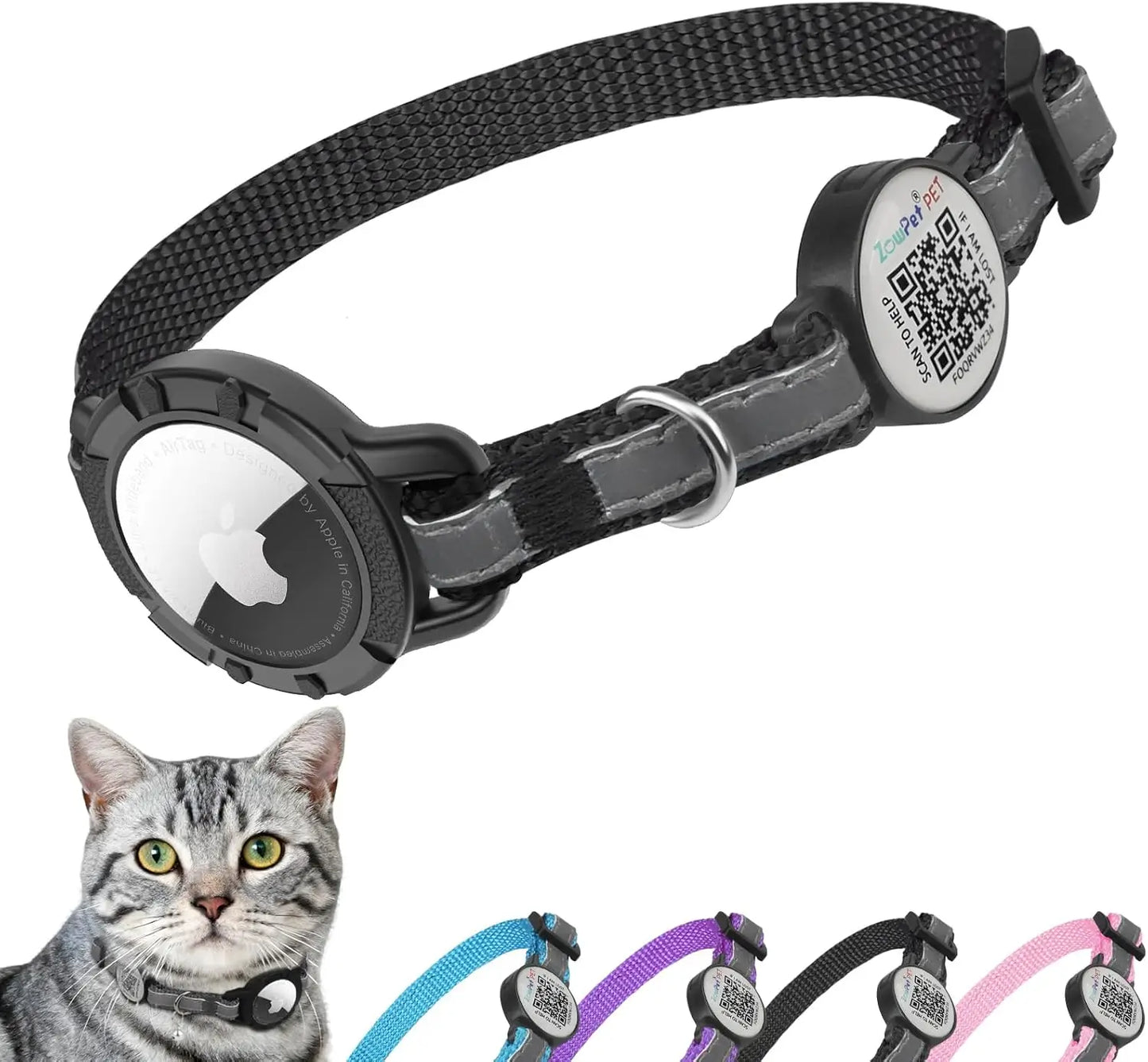
The Ultimate Guide to AirTag Collars for Dogs & Cats (2026 Edition)
The Psychology of Pet Tracking: Why AirTag Collars Bring Peace of Mind
For many pet owners, the appeal of an AirTag collar goes beyond pure technology — it’s about reducing anxiety. Losing a pet, even temporarily, is one of the most stressful experiences a pet parent can face. AirTag collars provide a constant sense of reassurance, especially for cats that slip outdoors or dogs that bolt unexpectedly. Knowing you have a digital “breadcrumb trail” — even if it’s not real-time GPS — significantly reduces panic and response time when a pet goes missing.
This psychological benefit is often overlooked in product comparisons, yet it’s one of the main reasons AirTag collars continue to grow in popularity. They act as a safety net, not just a tracker, giving owners confidence during travel, visits to new environments, or changes in routine.
Key Differences at a Glance
| Feature | AirTag Collar | GPS Pet Tracker |
|---|---|---|
| Monthly Fees | ❌ None | ✅ Yes |
| Battery Life | ~1 year | 1–5 days |
| Real-Time Tracking | ❌ No | ✅ Yes |
| Weight | Very lightweight | Heavier |
| Coverage | Apple device network | Satellite + cellular |
AirTag Collars as a Backup Safety Layer (Not a Single Solution)
One of the smartest ways to use an AirTag collar is as part of a multi-layer pet safety strategy. While microchips are essential for permanent identification and GPS trackers are excellent for real-time movement, AirTag collars fill a unique middle ground. They offer fast, passive location awareness without charging cables, subscription fees, or bulky hardware.
When attached to a pet collar:
- The AirTag emits a secure Bluetooth signal
- Nearby iPhones anonymously relay its location
- You see your pet’s last known location in the Find My app
In real-world scenarios, AirTags often serve as the first clue — showing you the neighborhood, street, or building where your pet was last detected. This drastically narrows search areas and helps pet owners act faster, especially during the critical first hours after a pet goes missing.
Best practice:
✔ AirTag collar
✔ Physical ID tag
✔ Microchip
AirTag Pet Collars vs GPS Pet Trackers
One of the most common questions pet owners ask is whether AirTags can truly replace GPS collars.
AirTag Collars: Best For
- Indoor cats & apartment pets
- Neighborhood dogs
- Travel, hotels, or boarding
- Budget-conscious pet parents
- Backup tracking alongside ID tags
GPS Trackers: Best For
- Hunting dogs
- Remote hiking or camping
- Pets roaming rural areas
- Real-time movement tracking

How AirTag Collars Perform in Apartments, Condos, and Cities
AirTag collars truly shine in dense living environments. Apartment buildings, condos, townhomes, and city neighborhoods create ideal conditions for the Find My network to work effectively. Elevators, hallways, parking garages, and nearby businesses are filled with Apple devices that can relay AirTag signals anonymously.
For cat owners living in apartments, this is especially valuable. If a cat slips into another unit, stairwell, or shared space, AirTag pings can often reveal vertical positioning — something many GPS collars struggle with indoors. In these settings, AirTag collars can outperform traditional GPS trackers despite their simpler design.
Are AirTag Collars Safe for Dogs & Cats?
Yes — when used correctly.
Safety Tips for Dogs
- Choose a secure, built-in AirTag holder
- Avoid dangling AirTag cases
- Ensure the collar fits snugly (two-finger rule)
- Opt for waterproof designs for active dogs
Safety Tips for Cats (Very Important)
- Always use a breakaway cat collar
- Lightweight materials only
- Avoid oversized AirTag cases
- Reflective or luminous collars improve nighttime visibility
Modern AirTag cat collars are designed specifically with quick-release buckles that pop open if your cat gets caught — a must-have feature.

Weather Resistance and Durability: Why Collar Quality Matters
While the AirTag itself is water-resistant, the collar and holder do the real protection work. Cheap or poorly designed holders can crack, loosen, or allow moisture inside — leading to tracking failures at the worst possible time. This is why integrated AirTag collars are increasingly preferred over clip-on cases.
High-quality AirTag pet collars use reinforced stitching, sealed holders, and durable materials like nylon weave or treated leather. These details matter, especially for dogs that swim, roll, or play rough. Over time, a well-built collar doesn’t just protect the AirTag — it protects your ability to locate your pet when it counts.
Battery Life Reality Check: What “One Year” Actually Means
AirTags are often advertised with a one-year battery life, but real-world usage can vary. Pets that roam frequently, pass through busy areas, or trigger Precision Finding more often may drain batteries slightly faster. Fortunately, replacing the battery is quick, inexpensive, and doesn’t require removing the collar entirely on many integrated designs.
For best results, pet owners should:
- Check battery status monthly
- Replace batteries proactively every 9–10 months
- Avoid cheap off-brand batteries
This low-maintenance aspect is one of the biggest advantages AirTag collars have over GPS alternatives that require frequent charging.
AirTag Collars for Multi-Pet Households
Households with multiple pets often struggle with managing multiple subscriptions, chargers, and apps when using GPS trackers. AirTag collars simplify this dramatically. Each pet can have its own AirTag, all managed from the same app interface, without increasing monthly costs.
For families with both cats and dogs, AirTag collars offer a consistent tracking experience across species, making them ideal for mixed households. This simplicity is especially appealing to busy pet parents who want safety without added complexity.
Ethical & Privacy Considerations for Pet Tracking
AirTags are designed with privacy in mind, using encrypted signals and anonymized location relays. However, pet owners should still understand how data flows through tracking networks. Unlike some GPS trackers that store location histories on third-party servers, AirTags rely on decentralized detection through nearby devices.
This means:
-
No public tracking maps
-
No shared location feeds
-
No third-party access to pet movement history
For privacy-conscious pet owners, this architecture can be a major selling point — particularly when compared to subscription-based trackers that store long-term location data.
Features to Look for in an AirTag Pet Collar (2026 Buyer Checklist)
Not all AirTag collars are created equal. Here’s what to prioritize:
✅ Built-In AirTag Holder
- Prevents loss
- Eliminates dangling noise
- More comfortable for pets
✅ Waterproof or Water-Resistant
- Essential for dogs
- Ideal for outdoor cats
- Protects AirTag electronics
✅ Breakaway Buckle (Cats)
- Non-negotiable for cat safety
- Elastic or pressure-release designs preferred
✅ Reflective or Glow Accents
- Improves nighttime visibility
- Adds safety beyond tracking
✅ Adjustable & Lightweight
- Especially important for kittens and small breeds
- Nylon or soft leather performs best
Long-Term Value: Why AirTag Collars Age Well
Technology evolves quickly, but AirTag collars age better than most pet tech. With no subscription dependency and simple hardware requirements, they remain useful year after year. Even if you upgrade phones or change pets, the collar ecosystem stays relevant.
Common Myths About AirTag Pet Collars
“AirTags track in real time.”
❌ Not true — they update when devices are nearby.
“AirTags work anywhere.”
❌ Coverage depends on Apple device density.
“They’re unsafe for pets.”
❌ Safe when used with proper collars.
“GPS is always better.”
❌ Depends on lifestyle and budget.
As Apple expands its device network and improves location algorithms, AirTag collars may actually become more accurate over time — without requiring you to buy new hardware. That future-proofing is a major reason AirTag pet collars continue to dominate search interest heading into 2026.
Final Verdict: Are AirTag Collars Worth It?
For most modern pet owners, AirTag collars are absolutely worth it.
They won’t replace GPS trackers for extreme scenarios — but for everyday life, they offer an unbeatable combination of simplicity, affordability, and effectiveness.
If your goal is knowing where your pet went — not tracking every step — an AirTag collar is one of the smartest pet tech upgrades you can make in 2026.