The Ultimate Guide to HDMI Sync Box Lighting That Will Transform Your Movie Nights
Share
Ever watched a movie and thought, “This would be so much cooler if the experience extended beyond my TV screen”? Grab your popcorn — HDMI sync box lighting might be your next favorite home theater upgrade. This technology expands on-screen colors into ambient lighting around your TV, transforming everyday viewing into a more immersive, cinematic experience that’s guaranteed to impress guests.
Whether you’re a tech enthusiast hunting for your next gadget or looking for a standout gift for a movie or gaming fan, this guide breaks down how HDMI sync lighting works, what systems are worth considering, and what to expect in real-world use.
What Is HDMI Sync Box Lighting?
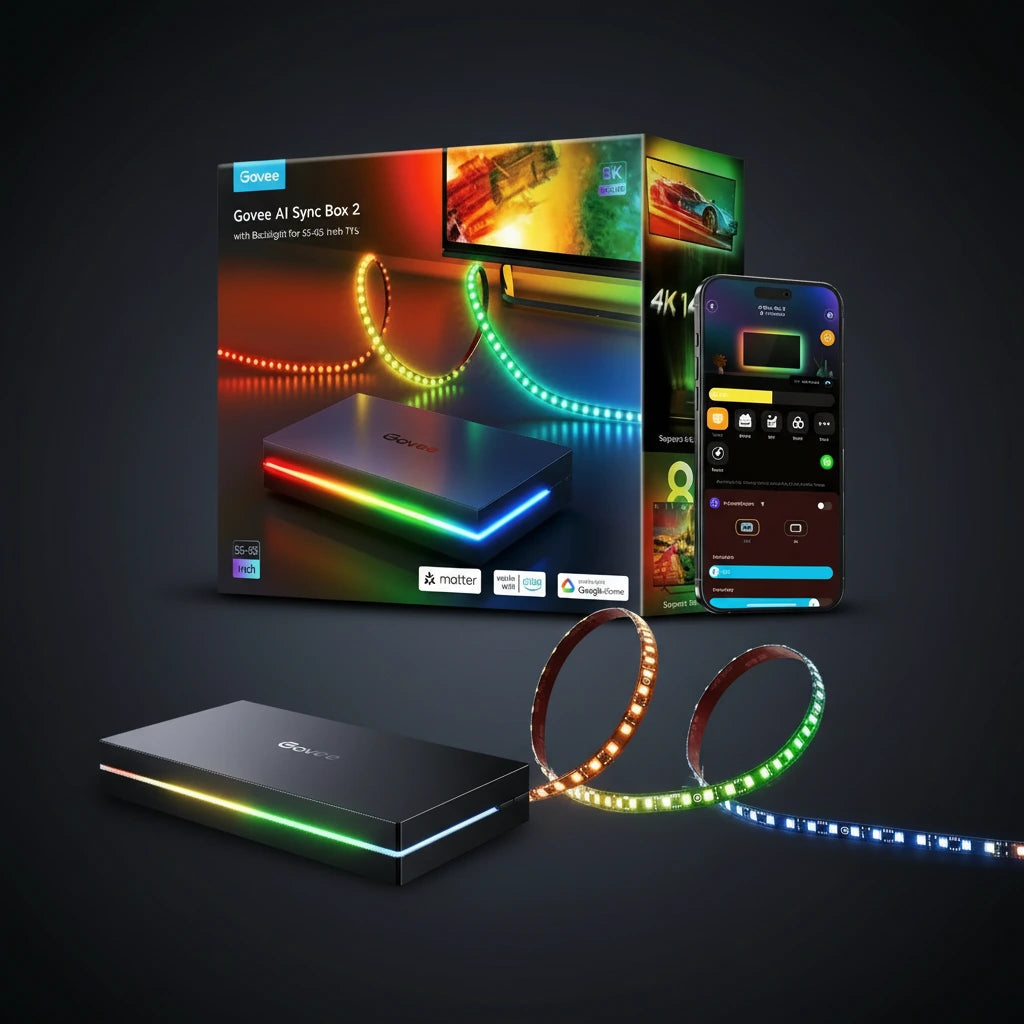
HDMI sync box lighting systems connect between your media device (streamer, console, Blu-ray player) and your TV. As video passes through the box, it analyzes color information from different areas of the screen and sends matching color commands to LED light strips or smart lights positioned around the TV.
The result? Ambient lighting that reacts dynamically to what you’re watching — blue hues for ocean scenes, fiery reds for action sequences, and subtle transitions during calmer moments. While it doesn’t make you “inside the movie,” it visually extends the screen, reducing eye strain and increasing immersion.
How HDMI Sync Lighting Systems Work
Here’s what’s happening behind the scenes:
-
HDMI passthrough: Your media device connects to the sync box, which then outputs video to your TV.
-
Color sampling: The box divides the screen into regions and samples dominant colors in real time.
-
Lighting commands: Those colors are translated into signals for LED strips or smart lights.
-
Near-real-time response: HDMI-based systems offer very low latency, making them suitable for movies and gaming.
Note: These systems analyze color regions, not individual pixels or true motion tracking.
Popular HDMI Sync Lighting Systems Compared
Philips Hue Play HDMI Sync Box
One of the most polished ecosystems available. It supports up to four HDMI devices and integrates seamlessly with Hue light strips, Play bars, and bulbs.
-
Best for users already invested in Hue
-
Multiple sync modes (movies, games, music)
-
Requires Hue Bridge
Govee Immersion TV Backlight
A camera-based alternative that mounts above or below your TV and visually reads the screen.
-
No HDMI passthrough required
-
Lower cost
-
Slight delay and less accuracy during fast motion compared to HDMI-based systems
-
Sensitive to room lighting conditions
DreamScreen 4K
A long-standing favorite among enthusiasts.
-
Supports 4K and HDR10
-
Very low latency
-
Zone-based color mapping
-
Operates as a standalone system without additional hubs
LIFX Z LED Strip (Important Note)
LIFX Z strips do not natively sync to HDMI video.
-
Screen matching requires third-party software or PC-based solutions
-
No direct support for consoles or streaming devices
-
Best suited for ambient lighting rather than true video sync
Setup Tips for Best Results
-
Mount LED strips behind the TV, aligned with screen edges
-
Leave 3–6 inches from the wall for better light diffusion
-
Light-colored walls reflect colors more effectively
-
Start with moderate brightness to avoid distraction
-
Use visually rich content (animation, nature docs, action films) for calibration
Troubleshooting Common Issues
Colors feel off
-
Re-run calibration
-
Disable aggressive TV picture processing
-
Reduce ambient room lighting (especially for camera-based systems)
Lag or delay
-
Update firmware
-
Reduce the number of synced lights
-
Use certified high-speed HDMI cables
Content not syncing
-
Some streaming services use HDCP copy protection
-
Enable compatibility modes if available
-
Ensure all devices support the same HDCP version
Is HDMI Sync Lighting Worth It?
HDMI sync box lighting isn’t just visual flair — it’s a legitimate enhancement to home entertainment when expectations are set correctly. It won’t replace surround sound or OLED contrast, but it does add atmosphere, reduce eye strain, and create an experience people remember.
If you enjoy immersive tech and want your setup to stand out, HDMI sync lighting is one of the most impactful upgrades you can make — and once you’ve watched a movie with it, it’s surprisingly hard to go back.