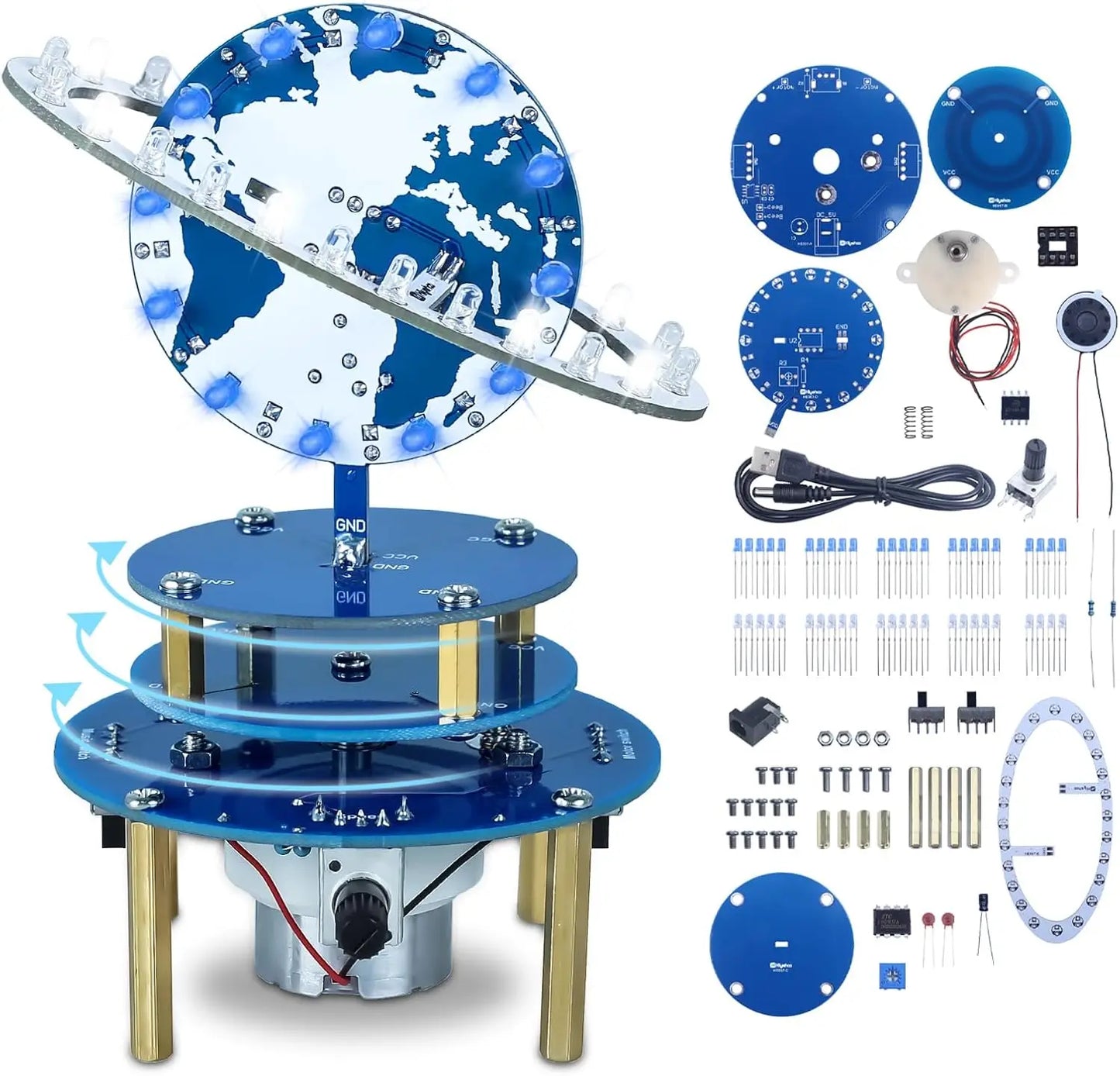
10 Best DIY Soldering Kits for Beginners to Spark STEM Learning
Share
Ignite Young Minds with DIY Electronics
Remember when learning meant textbooks and worksheets? Those days are fading fast as hands-on STEM education revolutionizes how children discover the world of science and technology. DIY soldering kits for beginners have emerged as secret weapons for parents and educators looking to transform abstract concepts into "wow, I made this!" moments that stick with kids forever.
These beginner-friendly electronic projects aren't just toys. They're gateways to understanding circuits, developing fine motor skills, and building the kind of confidence that comes from creating something real. The best part? That look of pure amazement when a child's creation lights up, beeps, or moves for the first time!
Let's dive into the wonderful world of DIY electronics kits that make learning feel like play while building tomorrow's innovators, one solder joint at a time.
Why DIY Soldering Kits Are Educational Gold
Ever watched a child's eyes glaze over during a science lesson, only to light up when they get to build something with their hands? There's real science behind this transformation. DIY soldering projects create neural connections that textbooks simply can't match.
When kids work with soldering kits, they're not just following instructions. They're engaging multiple learning styles simultaneously: reading directions, visualizing connections, physically manipulating components, and problem-solving when things don't work as expected.
The Science Skills They Secretly Teach
These unassuming kits pack serious educational punch:
- Circuit Understanding: Kids grasp electrical flow not as an abstract concept but as something they can control and direct.
- Spatial Reasoning: Placing components correctly on a circuit board develops 3D thinking and planning skills.
- Cause and Effect: "If I connect these two points, then the light turns on" creates powerful learning moments about scientific relationships.
- Persistence: When a project doesn't work the first time (and it often doesn't), children develop troubleshooting skills and resilience.
- Math Application: Measuring, counting, and understanding values of resistors and capacitors makes numbers meaningful.
Parents often report that after completing their first soldering project, children start looking at electronic devices differently. That tablet isn't just a screen anymore. It's a collection of components someone designed and assembled, just like their project!
Beginner-Friendly Kits That Won't Frustrate
Not all soldering kits are created equal, especially for beginners. The difference between an inspiring experience and a frustrating one often comes down to choosing the right starter project.
The ideal beginner kit includes clear instructions with pictures (not just text), quality components that connect easily, and a satisfying end product that does something cool. Avoid kits with tiny components or complex circuitry for first-timers.
Our Top 5 Picks for First-Time Solderers
- 1. Blinking LED Heart Kit Perfect for ages 8+, this simple project teaches basic circuit completion with just enough soldering to build confidence. The heart-shaped PCB with flashing lights makes for a proud display piece when finished.
- 2. Musical Doorbell Kit This slightly more advanced kit introduces kids to both electronics and sound principles. With about 15 solder points, it's challenging enough to feel accomplished but straightforward enough to complete in one sitting.
- 3. Robotic Bug Kit Motion brings extra excitement to learning. These kits typically feature 20-30 solder points and result in a small vibrating "bug" that scuttles across surfaces. The payoff of watching their creation move is huge for motivation.
- 4. FM Radio Kit For older beginners (10+), building a working radio provides an incredible sense of accomplishment. These kits introduce concepts like tuning circuits and signal processing in a hands-on way.
- 5. Light-Sensing Night Light This practical project teaches photoresistors and automatic switching. Kids love creating something useful for their bedroom while learning about sensors and environmental response.
What makes these kits special is their balance between challenge and achievability. Each provides that crucial "I did it!" moment that builds confidence for tackling more complex projects later.
Specific Kits
1. OSOYOO Soldering Practice Kit – Best Budget Learning Starter
For beginners who want to learn the basics without a big investment, this USB-powered soldering project kit is an excellent first step. It’s designed to teach foundational skills with a hands-on project that lets learners practice soldering to real components. Its simple design helps keep frustration low and engagement high.
2. Learn To Solder Jitterbug Soldering Kit – Quick Intro Practice
Ideal for newcomers of all ages, this soldering practice kit focuses on basic joints and simple assemblies that are perfect for building confidence and dexterity. It’s compact, affordable, and gives you a taste of how solder behaves on real circuits — a great confidence booster before moving on to larger projects.
3. WeevilEye Beginner Soldering KIT – Great First Electronics Project
This beginner-focused kit features a small circuit with a light-sensing component and LED “eyes.” As you solder it together, you’ll build a working project that responds to light, making the learning experience interactive and fun. Its low component count is perfect for absolute beginners.
4. elenco Learn to Solder Kit – Essential STEM Starter Kit
This all-in-one soldering practice kit includes everything you need to begin: soldering board, basic tools, and components. You’ll practice soldering techniques before assembling a flashing LED siren, so learners not only learn soldering but also the basics of circuits in action.
5. Complete Soldering Starter Set – Simple Beginner Combo
A solid choice if you’re just starting and want a very basic introduction to soldering projects. The starter set includes simple practice electronics and components that help new makers get used to the tools and techniques of soldering without overwhelming them.
6. DIY Musical Game Soldering Kit – Learn Through Sound
This fun soldering kit builds a simple device that produces sounds, adding an additional layer of engagement for learners who enjoy projects that do something once completed. Musical and interactive kits like this make soldering more memorable and meaningful.
7. Learn To Solder Kits Blink Deluxe Soldering Practice Kit – Mid-Range Hands-On Project
Stepping up from the simplest kits, this deluxe practice kit provides a bit more complexity and engagement. It’s still beginner-friendly, but offers a richer experience that can hold interest longer and deepen soldering skills.
8. Learn to Solder Kits Jitterbug Bulk Educator Pack – Best Classroom or Group Set
Perfect for educators or group learning environments, this bulk educator pack includes multiple soldering projects — ideal for STEM classes, clubs, or group workshops. It allows several students to learn simultaneously, encouraging collaboration and discussion.
9. Basic Soldering Starter Kit with 16 Oz Pickle Pot – Advanced Beginner Set
This more comprehensive kit blends traditional soldering tools with accessories like a pickle pot, tweezers, and flux, making it a great next-step investment for learners who want to take their soldering further. While not strictly a beginner kit, its quality tools support growth into more complex projects.
10. Schneider 5 to 50 Watt Soldering Station – Best Soldering Station for Future Projects
While not a project kit itself, a decent soldering station like this one is invaluable for beginners who plan to continue soldering beyond starter kits. With adjustable power and precise control, it’s a long-term tool that will serve well as skills improve.
From Kit to Creation: Making the Learning Journey Smooth
The difference between a one-time activity and a lasting hobby often comes down to the initial experience. Here's how to ensure your young inventor's first soldering adventure is positive:
- Set up a proper workspace. Good lighting, ventilation, and a heat-resistant surface make all the difference. A desk lamp that can be positioned directly over the work area is invaluable.
- Review the entire project before starting. Identify all components together and understand the full process before heating up the soldering iron.
- Embrace mistakes as learning opportunities. When (not if) something doesn't work right away, use it as a chance to develop troubleshooting skills rather than focusing on failure.
- Document the process. Taking before, during, and after photos helps children see their progress and builds pride in their work.
Safety Tips That Make Parents Feel Confident
Safety concerns often hold families back from trying soldering projects. These simple precautions make it a worry-free activity:
- Always use a soldering stand. The iron should have a secure place to rest when not in use.
- Keep a small container of water nearby. This allows for quick cooling of accidental touches (though proper technique makes these rare).
- Wear safety glasses. Even small solder splashes can be dangerous for eyes.
- Ventilate properly. Open a window or use a small fan to direct fumes away from the work area.
- Supervise appropriately. Younger children need direct supervision, while teens might just need periodic check-ins.
With these measures in place, soldering becomes no more dangerous than cooking activities many families already enjoy together.
Beyond the Basics: Growing with Electronics
Once your beginner has mastered their first few kits, the learning pathway opens wide. Many families find that what starts as a weekend project grows into a passionate hobby or even career interest.
Progression path for continued learning:
- Start with simple LED kits (5-10 solder points)
- Move to interactive projects with buttons and sensors (10-20 solder points)
- Advance to programmable kits that introduce coding concepts
- Graduate to open-ended electronics platforms like Arduino
The beauty of DIY electronics is how naturally it bridges to other STEM areas. A child who enjoys building circuits might discover an interest in programming to control those circuits, which opens doors to robotics, automation, and beyond.
Connecting DIY Electronics to School Success
Teachers consistently report that students with hands-on electronics experience show advantages in classroom science and math. The abstract becomes concrete when you've personally built circuits that demonstrate principles.
Many parents find that soldering projects create natural opportunities to discuss concepts from school in a relaxed setting. When a child asks, "Why isn't my LED lighting up?" you're suddenly having a meaningful conversation about polarity and electrical flow without it feeling like homework.
Consider keeping a simple project journal where your young maker can note what worked, what didn't, and what they learned. This reflection process reinforces learning and builds scientific thinking habits that transfer to school success.
Light Up Their Future with Hands-On Learning
DIY soldering kits for beginners offer that rare perfect balance of fun, challenge, and educational value that's hard to find in our digital age. They transform passive screen time into active creation time, building skills that last a lifetime.
Whether they're assembling a blinking robot or wiring their first simple circuit, the confidence children gain extends far beyond electronics. They're learning they can understand how things work, fix problems, and create something from scratch. In today's world, these might be the most valuable lessons of all.
Ready to watch their eyes light up (just like their first LED project)? Pick one of our recommended starter kits and prepare for an adventure where mistakes are just part of the learning process and success feels like real magic. Your kitchen table is about to become an innovation lab where curiosity rules and STEM concepts come alive, one solder joint at a time!