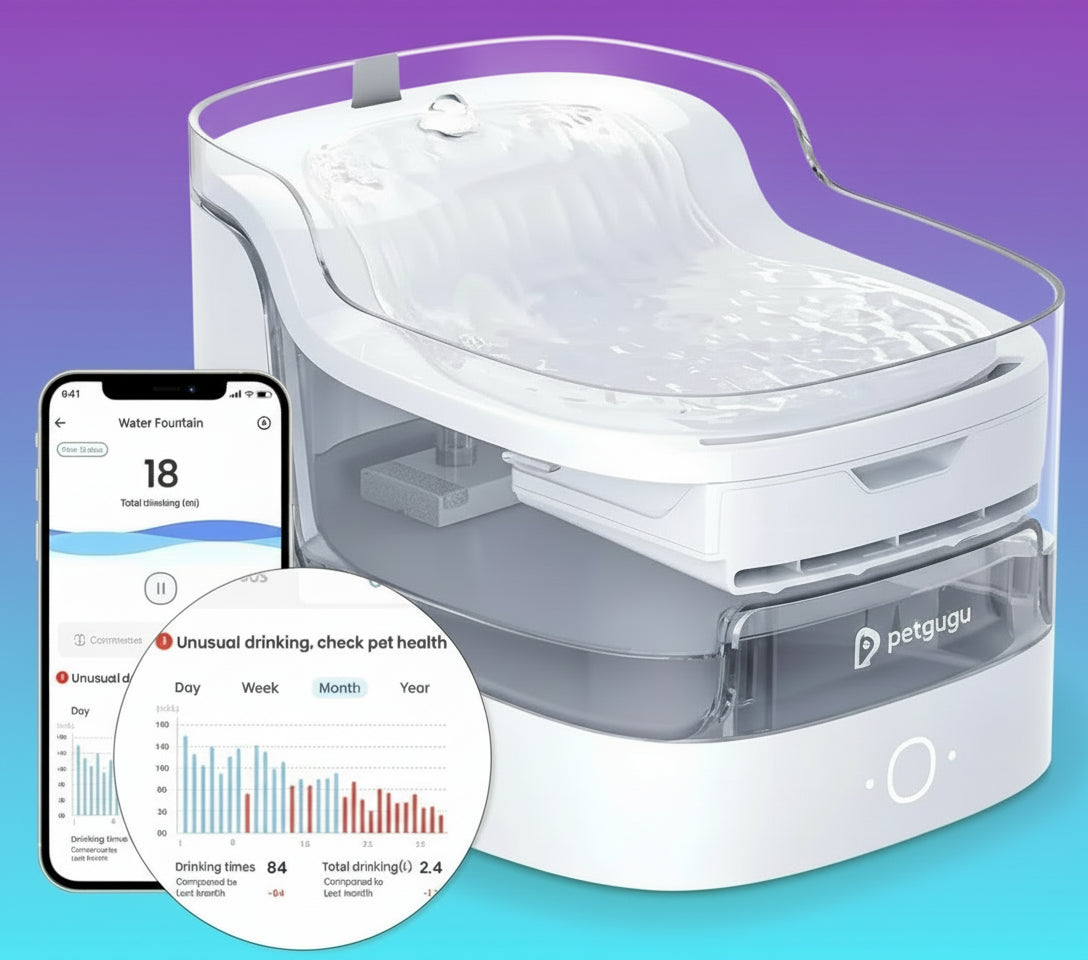
The Ultimate Guide to Choosing the Right Smart Cat Water Fountain
A smart cat water fountain can be one of those “small upgrade, big impact” purchases—cleaner water, less refilling, and in many homes, a cat that actually drinks more consistently. But not every fountain is right for every cat (or every human). Some are whisper-quiet; some sound like a fish tank. Some are easy to sanitize; some hide gunk in tiny corners. Some have helpful smart alerts; others add app complexity you don’t need.
This guide breaks down how to choose the right smart cat water fountain based on your cat’s habits, your home, and how much maintenance you’re realistically willing to do—plus real product examples to anchor the options.
Why a fountain at all?
Many cats show interest in running water, but it’s not universal—some cats prefer still bowls. A Royal Canin veterinary resource notes fountains are often recommended, yet use depends on individual preference. Research also shows mixed outcomes depending on setup and cat behavior: one controlled study found no statistically significant difference in consumption between flowing and still water in a small sample, despite a slight increase with flowing water. Another paper looking at moving sources in lab cats discusses hydration metrics and outcomes in that context.
The practical takeaway: fountains can help, especially for cats that like motion or fresh taste—but the right fountain (and consistent cleaning) matters more than “fountain vs bowl.”
Step 1: Choose the safest, easiest-to-clean material

Stainless steel (best all-around)
If you want the most “set it and forget it” hygiene option, stainless steel generally wins: it’s durable, resists odor, and is easy to scrub thoroughly. Many reviewers and testing roundups favor stainless steel drinking surfaces for cleanliness and maintenance.
Ceramic (excellent, but can chip/break)
Ceramic is non-porous and easy to clean, but it’s heavier and can crack if dropped. Great for stable placements, less great for chaotic households.
Plastic (budget-friendly, higher maintenance)
Plastic fountains work, but they can scratch and hold onto odors over time. If you go plastic, commit to more frequent deep cleaning and replacing parts as they wear.
Beginner rule: If you’re unsure, pick stainless steel at the drinking surface at minimum (even if the reservoir is plastic). Wired’s roundup highlights models with stainless steel bowls but plastic reservoirs, noting cleaning tradeoffs.
Step 2: Pick the right “water style” for your cat
Cats can be picky about the type of flow.
-
Faucet/spout stream: often attractive to cats who beg at sinks, but can splash.
-
Bubbling dome: quieter, less splash, some cats love it.
-
Gentle stream into a basin: a safe middle ground for most cats.
-
Still “pool” area included: great for cats who don’t trust motion.
Because preference varies (and studies show it’s not one-size-fits-all), a fountain with multiple flow options gives you more chances to find your cat’s favorite.
Step 3: Understand filtration (and the real ongoing cost)
Most smart fountains use a combo of:
-
Mesh/foam pre-filter (catches hair and debris)
-
Activated carbon (reduces odor/taste)
-
Sometimes ion-exchange resin (helps with minerals)
Filter replacement: what’s realistic?
Replacement schedules vary by brand and filter type, but a common real-world pattern is every 2–4 weeks for many carbon filters, and more often if you have multiple cats or hard water.
What this means for choosing:
-
If filters are expensive or hard to find, the fountain becomes annoying quickly.
-
If you have 2+ cats, assume you’ll replace filters more frequently than the box suggests.
Pro tip: Before buying, check:
- price of filters,
- if they’re easy to order,
- whether generic replacements exist.
Step 4: Pump design and noise (this matters more than you think)
A fountain can be perfect on paper and still fail if:
- it’s loud,
- it vibrates,
- or it makes your cat nervous.
Look for:
- “Whisper-quiet” pump claims plus real reviews that confirm it.
- Low-water protection (auto shutoff or alert)
- Tool-free disassembly (you’ll clean the pump more than you expect)
Step 5: Capacity and household fit (single cat vs multi-cat)
Capacity isn’t just about “days between refills”—it’s also about keeping water fresher.
- 1 cat: smaller capacity is fine if you top up often.
- 2–3 cats: mid-to-large capacity helps avoid running low.
- Big households: pick larger, and prioritize an easy clean design.
Also consider placement:
-
If you want cordless flexibility (no outlet nearby), look for battery/cordless models—these are increasingly common in newer “smart” fountains and are often highlighted in recent best-of lists.
Step 6: Smart features worth paying for (and which are just noise)
“Smart” can mean anything from a simple LED alert to app-connected hydration analytics. Here’s what’s actually useful:
Worth it
- Low water alerts (especially if you travel)
- Pump blockage alerts (hair happens)
- Filter replacement reminders
- Auto shutoff when water is too low
Nice-to-have (for data people)
-
Drinking activity tracking (can show changes over time)
Wired mentions app logging of drinking behavior on some models—cool if you’ll use it, pointless if you won’t.
Usually not worth it
- Overly complex apps
- Mandatory accounts for basic operation
- Excessive notifications you’ll ignore
Best advice: Pay for smart features that reduce risk (running dry, pump damage), not features that create more work.
Step 7: Cleaning reality check (the most important part)
Here’s the honest truth: a dirty fountain is worse than a clean bowl. Biofilm can hide in corners, tubing, and the pump housing if you don’t clean regularly.
A beginner-friendly cleaning schedule
-
Daily / every other day: quick rinse + refill
-
Weekly: disassemble, scrub, wipe the pump area
-
Every 2–4 weeks: deep clean + replace filters (depending on type, cats, and water)
If you know you won’t deep clean weekly, choose a model that’s:
-
dishwasher-safe parts,
-
fewer crevices,
-
and easy pump access.
Product examples (so you can visualize the categories)
Below are examples from recent “best fountain” roundups—use them as reference points for feature sets, not the only options.
1) Best cordless / flexible placement style
-
Petlibro Dockstream Cordless is cited as a top overall pick in a recent Forbes roundup, largely for quiet operation and wireless design.
Who it’s for: people who hate cord placement problems, or want a fountain away from outlets.
2) Best for smart tracking + app insights
-
PETKIT Eversweet Max is highlighted by WIRED for app-based drinking logs and flexible power options, with notes about cleaning complexity due to shape/battery integration.
Who it’s for: data-driven cat parents who will actually check the app.
3) Best “easy cleaning” oriented picks
-
Independent review sites like Cats.com emphasize models that are simple to disassemble and clean, calling out ease-of-clean designs as a major win.
Who it’s for: everyone who wants to keep the fountain hygienic without turning it into a weekly project.
(If you tell me your budget + whether you want cordless + how many cats, I can narrow this into a short “top 3 for you” list.)
Quick decision cheat sheet
Choose stainless steel + simple design if:
-
you want the least gross buildup,
-
you want easy scrubbing,
-
you prefer long-term durability.
Choose cordless smart fountain if:
-
outlets are inconvenient,
-
you travel,
-
you want low-water alerts.
Choose multi-flow if:
-
your cat is picky,
-
you’re switching from a bowl,
-
you’re not sure what style they’ll accept.
Avoid “too clever” designs if:
-
the pump is hard to access,
-
there are many tiny channels,
-
replacement filters are pricey or rare.
Final thoughts: the “right” fountain is the one you’ll maintain
A smart cat water fountain is only as good as:
- how much your cat likes it, and
- how easy it is for you to keep it clean.
Because cat preference varies (and research doesn’t show fountains are universally superior), your best strategy is picking a model that matches your routine and your cat’s personality.